What is LRV in Paint Colors? Why This Number Matters More Than You Think
If you’re constantly picking colors that feel too light or too dark—this one’s for you.
In this article I want to talk to you about what LRV is and why it’s crucial you understand it before you choose paint colors.
Don’t worry as I won’t get too technical because I know you’re already overwhelmed just trying to nail down colors for your home.
What is LRV?
In essence, Light Reflectance Value (LRV) is how you quantify how light or dark a color is. It tells you how much light it reflects.
Every color has a number from 0-100.
The higher the number, the lighter/brighter the color is. (100 is absolute white.)
The lower the number, the darker it is. (0 is absolute black.)
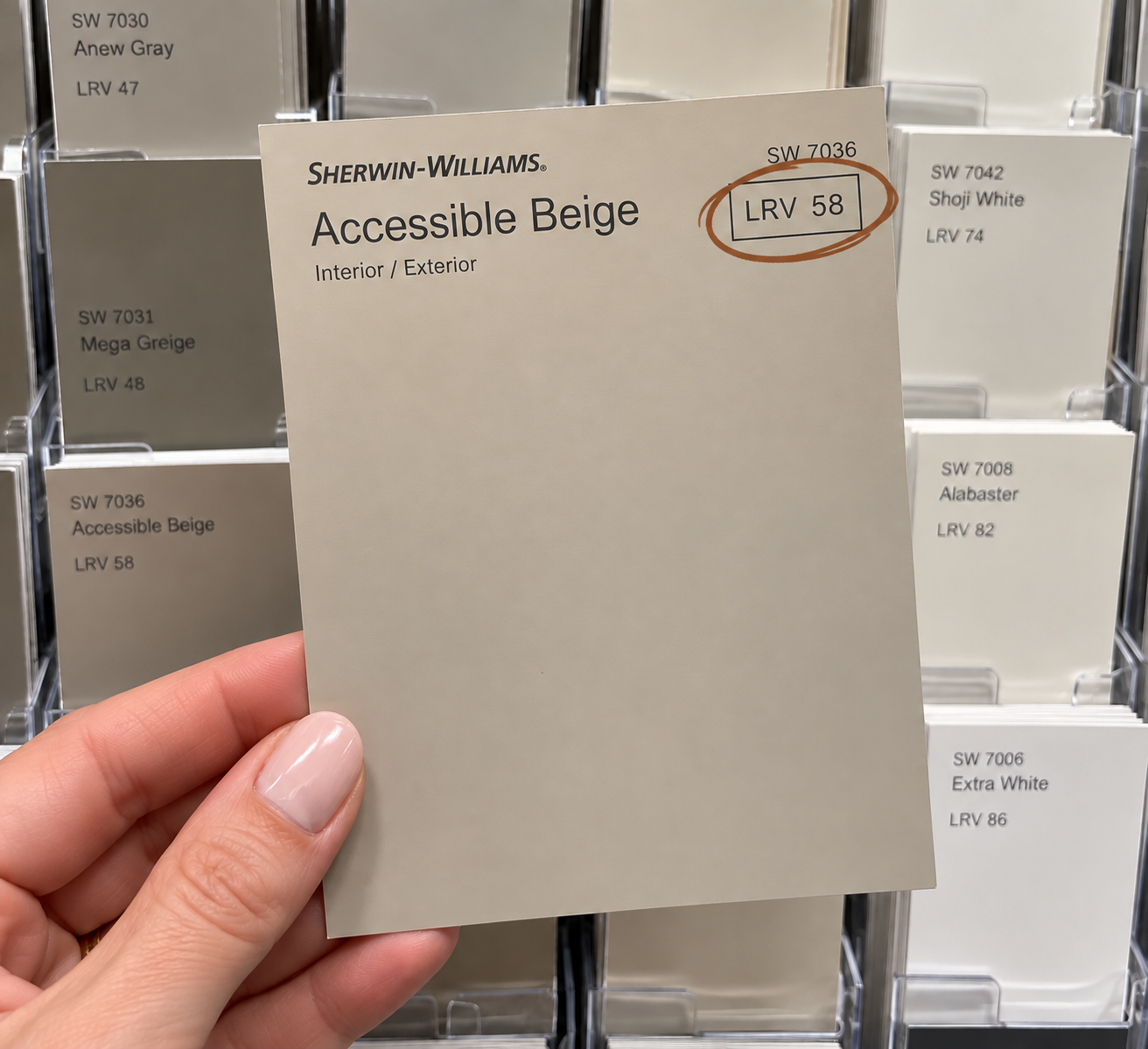
You can see these numbers on any paint company’s website and sometimes on the back of a paint chip.
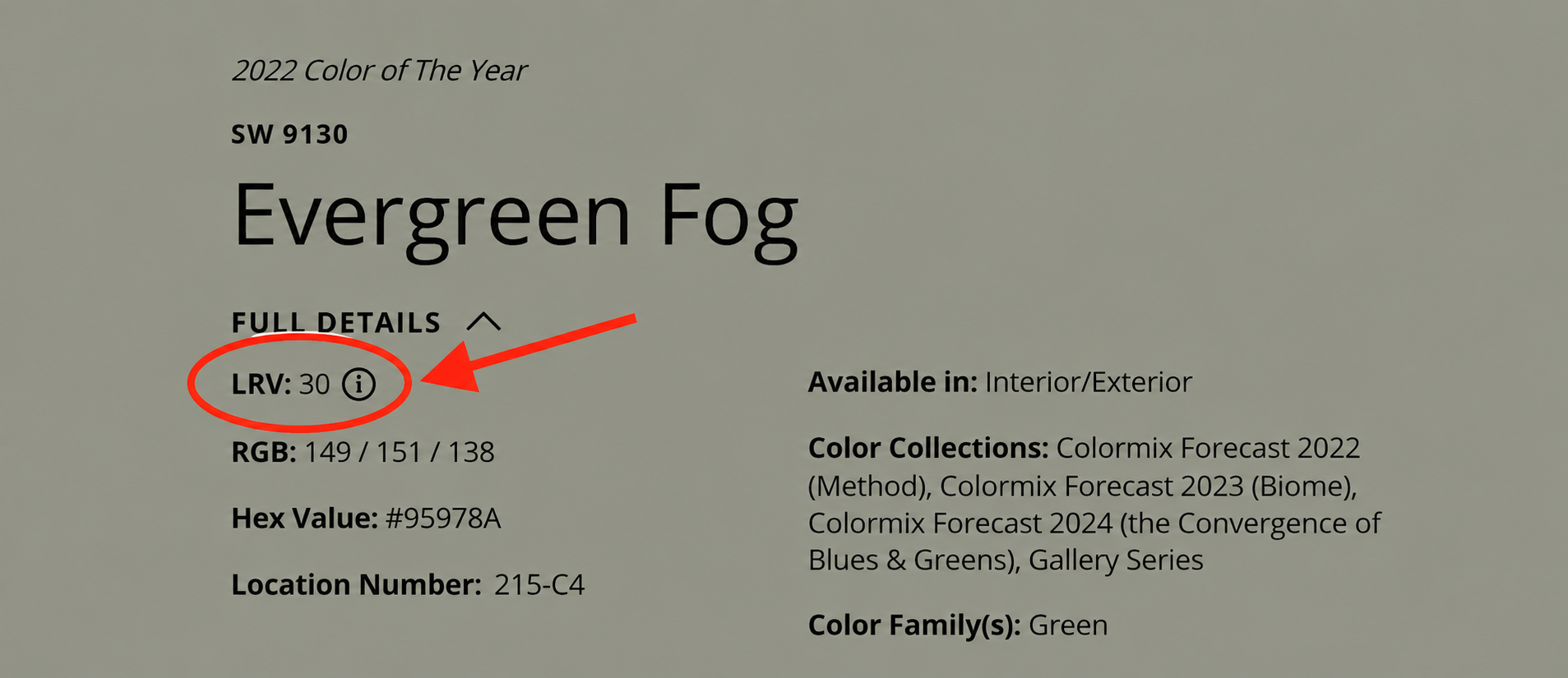
This is one of my favorite muted greens from Sherwin Williams
A little story time on LRV (learn from my mistakes):
Let me take you back to 2021 on a beautiful sunny Saturday morning before I knew much about paint color.
I was excited to paint one of the bedrooms in my home and chose a really pretty rosewood color at the paint store, bought a gallon right away (rookie move) and the next thing I knew, it felt CRAZY dark in there.
The room felt so tiny, and very shadowy.
It made no sense to me.
It didn’t seem that dark on the paint chip and it was very clear there were way darker colors at the paint store.
Turns out, it had an LRV of 16. (Really dark, see below for the LRV chart and my interpretation of how light or dark each range is.)
And that is the day I knew I had to start taking LRV seriously.
Understanding the LRV Range
So if you don’t want to waste $82 like I did that day, you’ll want to have a general understanding of LRV.
So here’s the quick and dirty on understanding the range so you can narrow down your selection even better.
0-19: Very dark
20-39: Still dark, but not overpowering
40-60: Midtone
61-89: Light!
90+: Very light
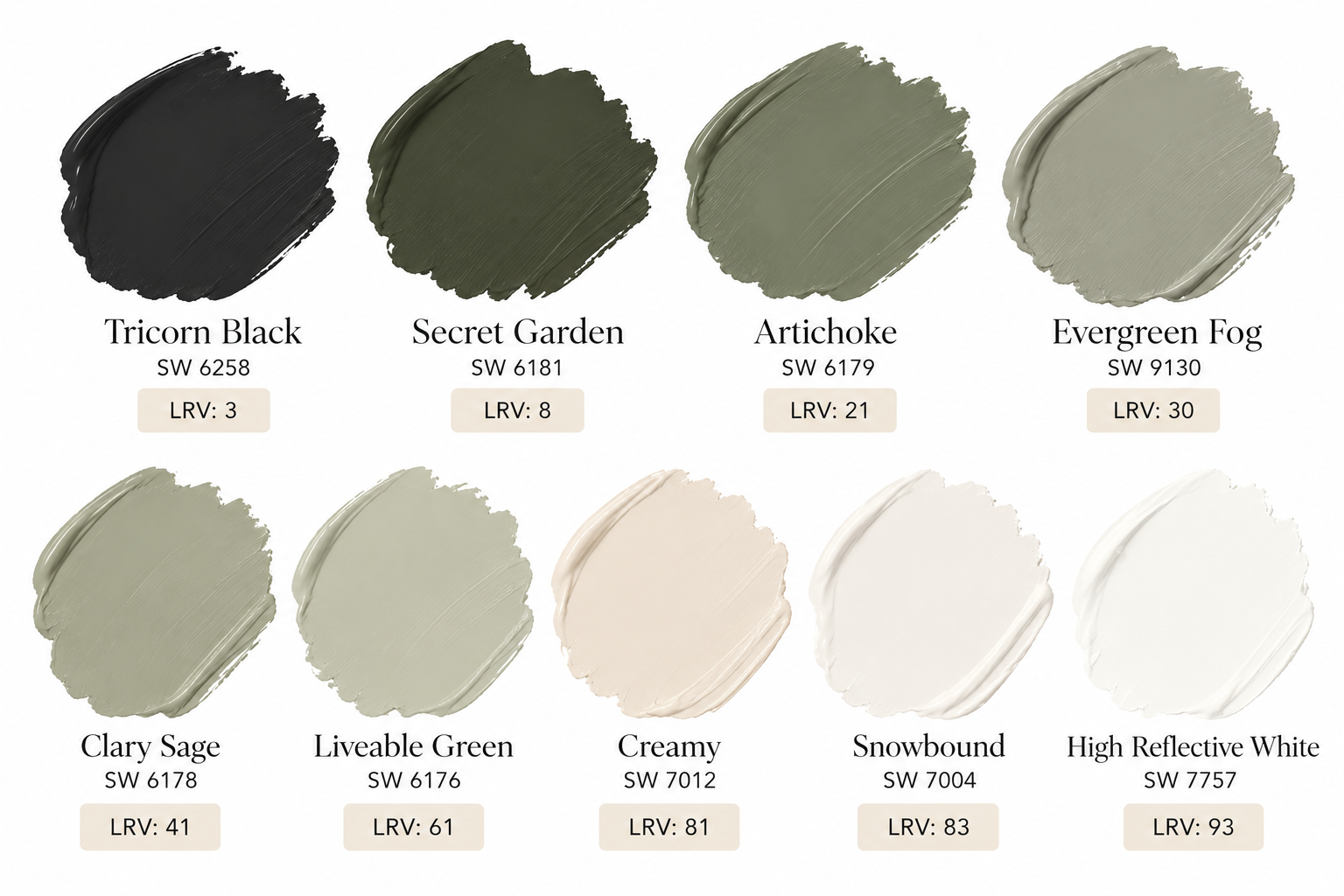
I pulled a handful of Sherwin-Williams colors so you can see this in action.
Look how dark Tricorn Black is (LRV 3) and how the colors increasing get lighter as you move up. High Reflective White is also the lightest color Sherwin-Williams has (LRV 93).
How to Know Which LRV works for Your Room?
Herein lies the next challenge because it can be nuanced.
How much natural light does the space get? In many cases, if you don’t get a ton of natural light, aiming for an LRV of 50-65 can be a solid sweet spot.
If possible, avoid white paint colors as they’ll show up dingy.
How do I know this? Because I tried to paint my north-facing (least amount of direct sunlight) Chantilly Lace OC-65 by Benjamin Moore (LRV 90) as I fell in love with it in my West-Facing (incredible amount of direct light) and I’ve never seen walls look so chalky in my life.
Remember too that just because you have a handful of windows doesn’t mean you get a lot of natural light.
If you get a TON of natural light, you have a little more flexibility. Midtone (LRV 40-60) can help wall colors from washing out in homes with lots of direct sunlight, but also too light of a color on the walls could become blinding because the light from the sun will be bouncing off the walls on bright days.
I know, LRV can feel like a lot to learn on top of trying to choose color. But I hope that you’re starting to piece together why that last sample you bought was too dark or too light.
—
If you’re on Seattle’s Eastside and want to book a free discovery call for a home color consultation, view my calendar here.